


Algae is a simple non flowering plant that lack true stems, roots, leaves, as well as vascular tissue. The most common form of algae is seaweed which get their energy by undergoing photosynthesis. This photosynthetic process is considered more unique than other plants and protists because they are able to do it at a much more rapid as well as efficient rate-approximately 30 times faster than other biofuels that are used today. (A1)


Algae grows in oceanic water meaning that it will not deplete valuable freshwater resources used for other crops on land. Furthermore, it does not require any soil which means that it will not use up any arable land. On top of that, after it has been burned for energy, it is able to release oxygen and absorb harmful pollutants and carbon emissions. (A1)
The use of Algae to address energy issues has been discussed in recent years as it is able to take up less space than all other biofuel crops such as corn. This is supported by the fact that the United States Department of Energy estimated that it would take only 38,850 square kilometers, to grow enough algae to replace all petroleum fueled energy need in the United States. (A1)


Algae also contains oils that can be converted into biofuels by being chemically processed with the use of heat and pressure. One of the most important factors of algal growth is carbon dioxide intake as it is able to increase growth rate and oxygen waste products within algae. In other words, algae is able to act as a filter that absorbs harmful carbon emissions as well as replenish oxygen gasses. (A1)
Algae biofuels are sequestered postmortem in which their lipids [or fatty oils] are converted into biofuels or fish food through chemical processing. By in all, algae contains enormous potential as an alternative energy source. However, processing it into usable forms can be extremely costly. (A1)

What is Aglaculture and Algae?
"Call it 'fuel without fossils': Jonathan Trent is working on a plan to grow new biofuel by farming micro-algae in floating offshore pods that eat wastewater from cities." (A10)
"Scientists are always looking for alternatives to fossil fuels, but what about algae? Can algae be used to create biofuel?" (A11)
How is Algae Harvested?
Algal biomass contains three main components: carbohydrates, proteins, and lipids/natural oils. The oil component of algae is primarily due to the lipid content within the organism specifically in the form of triacylglycerol (Figure 1). In addition to biodiesel, microalgae can also be used to generate energy in several other ways. Some algal species can produce hydrogen gas under specialized growth conditions. The biomass from algae can also be burned similar to wood or anaerobically digested to produce methane biogas to generate heat and electricity. Algal biomass can also be treated by pyrolysis to generate crude bio-oils. (A23)

Figure 1. Molecular structure of tricylglycerols (A23).
Algae is primarily harvested within open pond systems for mass cultivation in which a raceway configuration is made which contains a variety of paddlewheel equipment that is used to mix algae with essential nutrients (Figure 2). These raceways are usually made from poured concrete, or simply dug into the earth and lined with plastic to prevent the ground from soaking up the liquid. The baffles or bends within these systems allow for increased surface area that is utilized for a higher efficiency in producing these fuels and allow for continuous circulation. The resulting fluids, known as ‘algal broth’, are harvested behind the the paddle wheel after having circulated through the entire system. (A23)
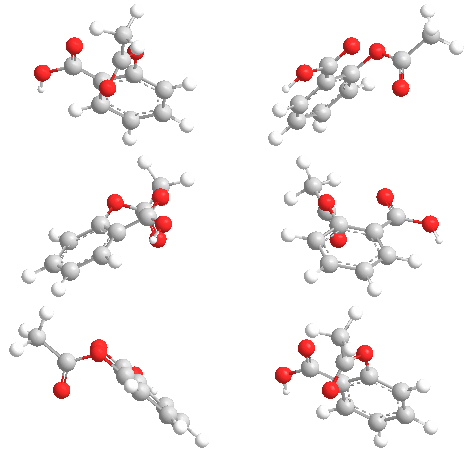


Image of an open pond system (A23).
Figure 2. Schematic open pond system for algal culture (A23).
Other harvesting techniques include enclosed photobioreactors which, though more expensive, are able to overcome contamination and evaporation dilemmas present within open pond systems (Figure 3). These systems are often made of transparent materials primarily in a tubular design and are generally placed outside for illumination by natural light. Within this system, a medium algal broth is circulated through a pump to the tubes, where it is exposed to light for photosynthesis, and then it is circulated back to a reservoir. The algal biomass is prevented from settling in the tubules by a constant turbulent flow within the reactor, using either a mechanical pump or an airlift pump. A portion of the algae is usually harvested after the solar collection tubes. In some photobioreactors, the tubes are coiled spirals to form what is known as a helical tubular photobioreactor, but these sometimes require artificial illumination, which adds to the production cost. (A23)

Figure 3. Schematic tubular photobioreactor (A23).

Image of an algae photobioreactor (A23).
After the collection of the algal broth, the resulting fluid must be further processing. The commonly used harvest method is through gravity settlement, or centrifuging in which the oil from the biomass will be removed through solvent extraction and further processed into biodiesel. The resulting fluid is then further chemical processed through various methods which are then exploited for energy to power the Earth. (A23)
 Did you know?Years ago, after a mass extinction, that algae and bacteria consumed all of the sea’s oxygen, slowing the earth’s recovery! (A25) |  Did you know?Some algae are so cool, they can live in the snow, just like the pink-colored algae in the picture! (A26) |  Did you know?The descendants of some of the first algae probably live inside your cells! (A26) |  Did you know?Algal blooms can kill fish! (A26) |  Did you know?Algae are a massive, diverse group of organisms that photosynthesis their energy from the sun, breath in CO2 and respires oxygen in the daylight and breath in oxygen and out CO2 at night! (A27) |
|---|---|---|---|---|
 Did you know?Algae can be found floating in both fresh water and salt water. Some species like to chill in the soil while other species live in the fur of animals, on the barks of trees and even glide with the clouds! (A27) |  Did you know?Algae is at the beginning of the food chain for all sea life as well as many other animals! (A27) |
 Did you know?Kelps are the largest type of algae and they can be more than 200 feet long! (A22) |  Did you know?The oceans cover about 71% of the Earth's surface, yet algae produce more than 71% of the Earth's oxygen; in fact, some scientists believe that algae produce 87% of the world's oxygen! (A22) |  Did you know?There are over 20,000 known varieties of algae! (A22) |  Did you know?Fossilized Algae are used to make dynamite! (A22) |  Did you know?In some areas of the Indian ocean the sea surface lights up at night. It is so bright that one can read a newspaper. This light is caused by tiny sea algae, the Dinoflagellata. Sometimes the lightened surface has a diameter of more than 1.5 km! (A22) |
|---|---|---|---|---|
 Did you know?Red algae are important members of coral reefs. Red algae are unusual among the algae because they can include in their cell walls calcium carbonate which makes the plants hard and resistant to wear! (A22) |  Did you know?Brown algae are found mainly in the tidal zones of temperate to polar seas, but some exist in the deep ocean. Among the brown algae are the largest and most complex of the algae; well-known forms include the giant kelp and the free-floating sargassum weed! (A22) |  Did you know?Algae are used in many wastewater treatment facilities, reducing the need for harmful chemicals, and are used in some power plants to reduce carbon dioxide emissions! (A22) |
A
B
O
U
T
Click below to learn More About Algaculture


"Algae biofuels may provide a viable alternative to fossil...". (A14)
"Biofuels offer plant-based solutions to the Earth's growing energy...". (A13)
"Algae farms are places where algae is grown for commercial use..." (A12).


"Microalgae are a renewable source of feed, fuel and...". (A15)
"From 2005 to 2012, dozens of companies managed to extract..." (A16).